
IVF and embryo transfer
Comprehensive IVF cycles with lab monitoring, embryo grading, and tailored transfer planning to optimise outcomes.
Charitos BO Hospital7 min read
In short
- IVF brings eggs and sperm together in the laboratory, then places an embryo in the womb.
- Your medicines and timing are planned for you, and adjusted as scans show your response.
- ICSI, injecting one sperm into each egg, helps when sperm quality is low.
- Spare good-quality embryos can be frozen and stored in our cryobank for up to 10 years.

What in vitro fertilisation involves
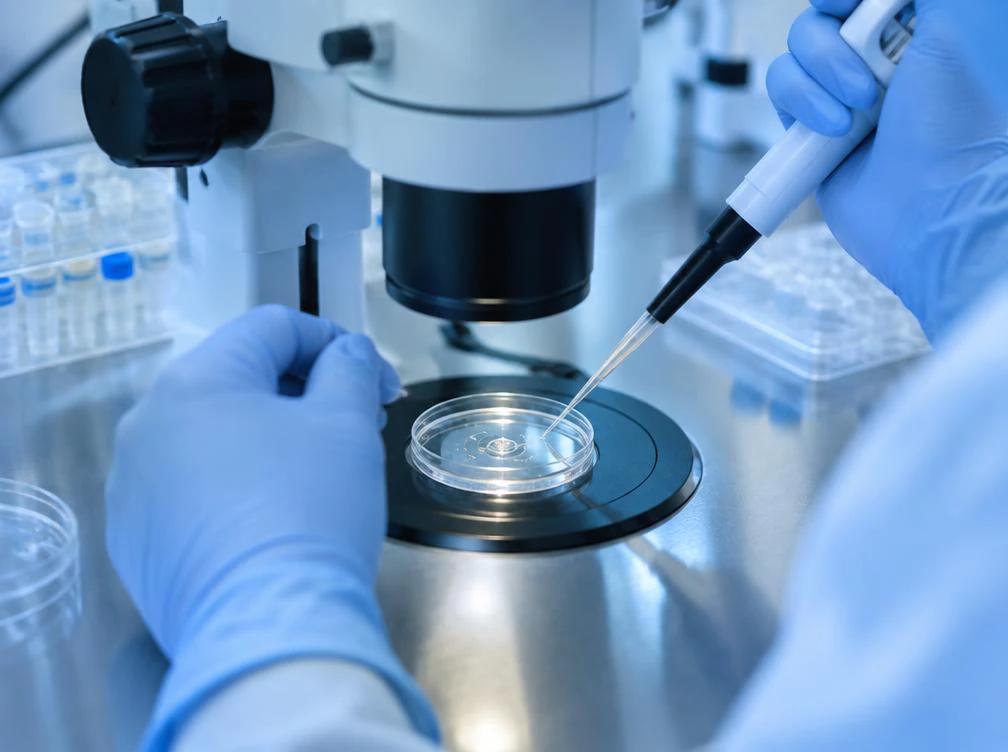
IVF brings egg and sperm together in our embryology laboratory rather than inside the body. Eggs are collected in a short day-case procedure, fertilised and cultured under controlled conditions, then one or more resulting embryos are transferred to the uterus. Your consultant will explain which variation of the pathway suits your diagnosis. For a step-by-step timeline, see the stages of IVF.
How your cycle is planned
Every cycle begins with a review of your diagnostic results and previous treatment history. Your consultant sets a stimulation protocol, a monitoring schedule and a transfer strategy against your specific clinical picture.
No single protocol suits everyone: the medicines, doses and timing are chosen for you, then adjusted as your scans show how your ovaries respond.
ICSI: when sperm need help
In intracytoplasmic sperm injection (ICSI), an embryologist injects a single sperm directly into each mature egg. It is used when the sperm count, movement or shape is low, when sperm have been collected surgically, or when eggs failed to fertilise in an earlier cycle. Read more about male infertility.
Laboratory and embryology care
Embryos are cultured in a monitored laboratory environment, with grading recorded at defined checkpoints so transfer decisions rest on documented development rather than impression.
Frozen eggs, sperm and embryos are kept in our cryobank in liquid nitrogen at −196°C, with weekly checks and a double-witnessing system at every step to prevent any mix-up.
After the transfer
You can return to your usual daily activities after the transfer; resting in bed does not improve the chance of success. A blood test two weeks later shows whether you are pregnant, and we meet you either way to plan the next step.
Common questions
How long does one IVF cycle take?
From the start of stimulation to the pregnancy test, a cycle usually takes about a month, though the exact timeline depends on your protocol. Your team will give you a dated schedule before you start.
How many embryos are transferred?
This is decided with you before transfer, weighing your age, the quality of your embryos and your history. Transferring more than one embryo raises the chance of twins or triplets, which carry higher risks for mother and babies, so your consultant will talk the choice through with you.
What happens to embryos that are not transferred?
Good-quality embryos that are not transferred can be frozen for a later frozen embryo transfer, with your written consent. Our cryobank can store them for up to 10 years.
How much does IVF cost at Charitos?
Our low-cost IVF package is ₦1.35M for one cycle, all-inclusive: the IVF drugs, the technical fee and the laboratory investigations. Donor eggs or sperm, genetic testing of embryos, surrogacy and fertility surgery are not included. See IVF & fertility.
Sources and further reading
- In vitro fertilisation (IVF) (opens in a new tab)Human Fertilisation and Embryology Authority (UK)
- Intracytoplasmic sperm injection (ICSI) (opens in a new tab)Human Fertilisation and Embryology Authority (UK)
- IVF (opens in a new tab)NHS
This article is general guidance, not medical advice. Whether a treatment suits you, and what it is likely to achieve, can only be assessed by a clinician who knows your history. If you are worried about your health, please call us.


